Hair loss treatment has become increasingly sophisticated, but that has also made it more confusing for patients trying to work out what actually suits their situation. One treatment attracting more interest is topical Dutasteride®. It is often discussed by men researching DHT-driven hair loss, especially those who want something targeted and medically guided rather than relying on guesswork.
In clinic, this treatment tends to come up once a patient has already tried over-the-counter products, or has begun noticing the classic pattern of thinning through the temples, frontal hairline or crown. The key question is usually the same: will a hormone-directed scalp treatment help, and when is it worth combining with regenerative therapies such as PRP, PRF or GFC?
That decision should always begin with diagnosis.
Why DHT Matters In Pattern Hair Loss
For many men, and some women, androgenetic alopecia is driven by follicle sensitivity to dihydrotestosterone, commonly referred to as DHT. DHT is a potent androgen derived from testosterone. In genetically susceptible follicles, it gradually shortens the hair growth cycle and causes follicles to miniaturise.
Miniaturisation does not mean the follicle disappears straight away. It means it begins producing finer, shorter and weaker hairs over time. If the process continues untreated, the follicle may eventually stop producing visible hair altogether.
This is why earlier intervention often produces better outcomes. Once follicles are completely lost, no topical hormone treatment can restore them.
What Topical Dutasteride® Actually Is
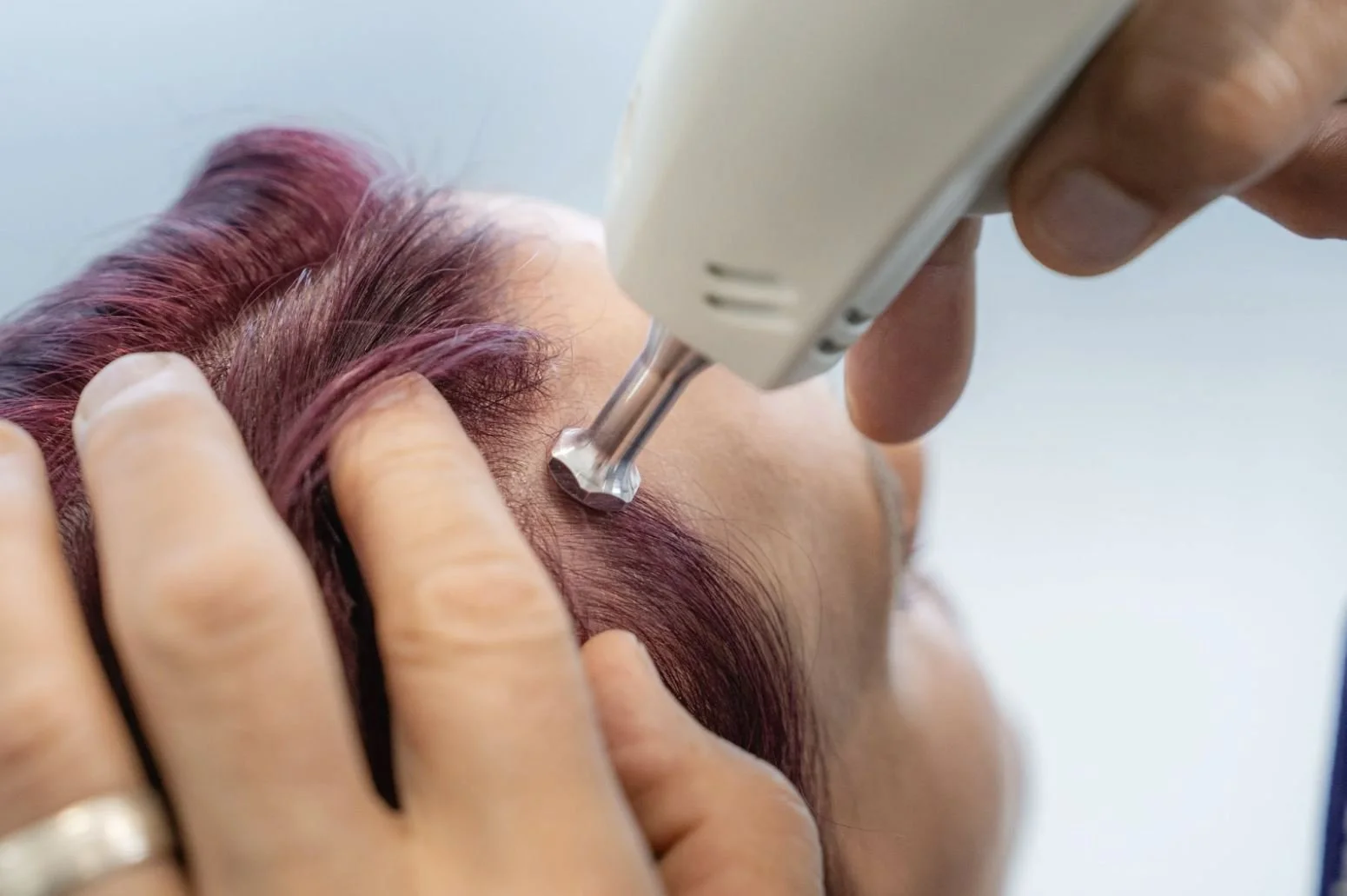
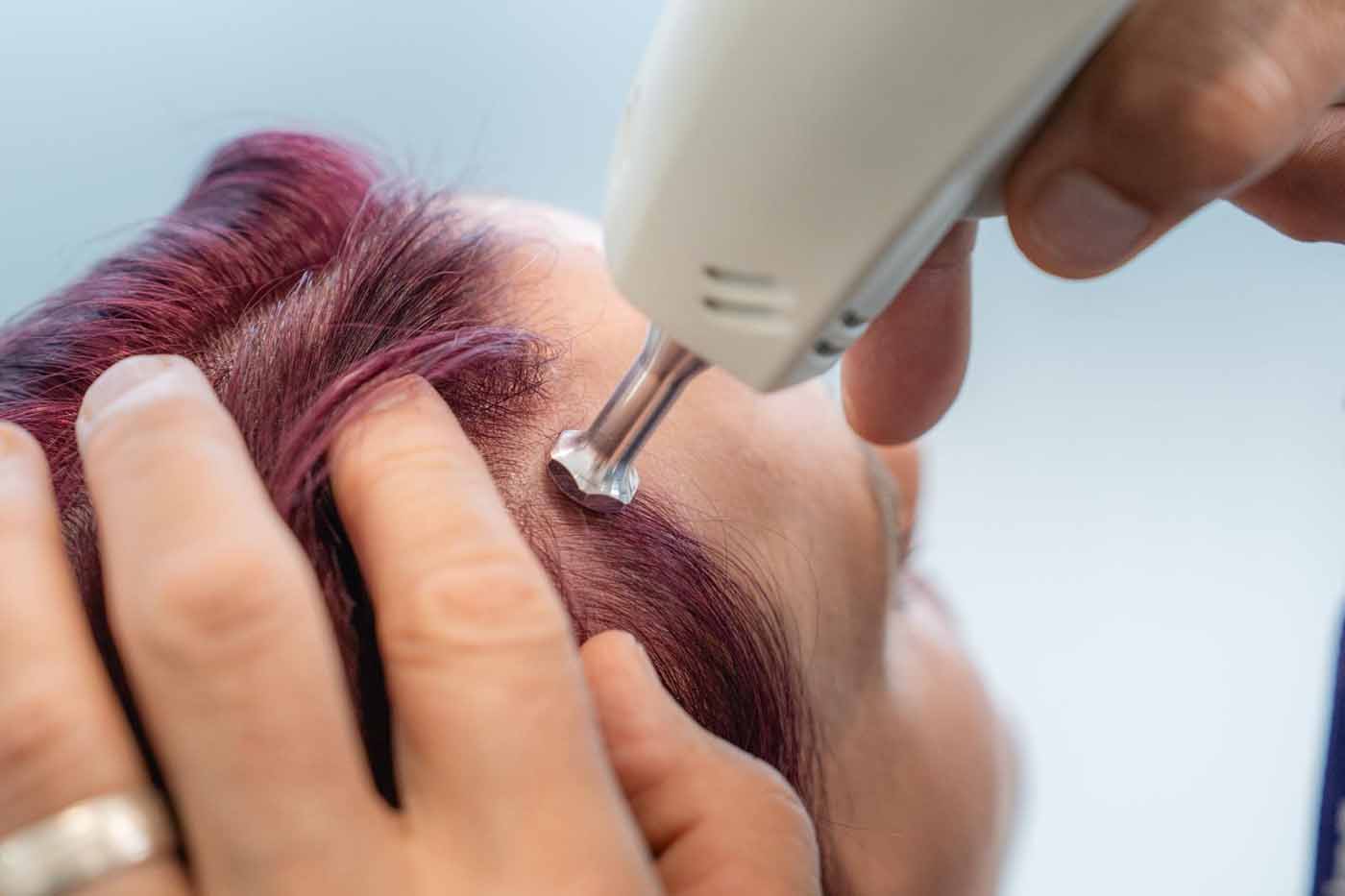
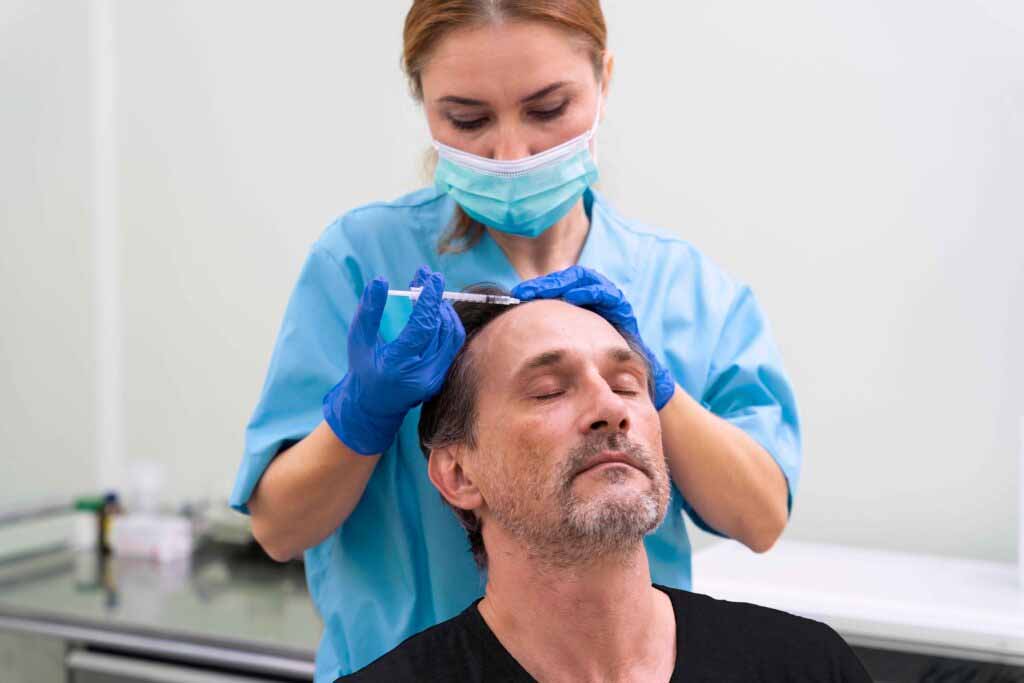
Topical Dutasteride® is a locally delivered treatment designed to reduce the effect of DHT at scalp level. It differs from oral Dutasteride® because the intention is to concentrate treatment where it is needed most rather than relying solely on whole-body exposure.
For the right patient, that can be appealing. They are often looking for a targeted option that sits within a broader hair restoration plan rather than a stand-alone tablet-first approach.
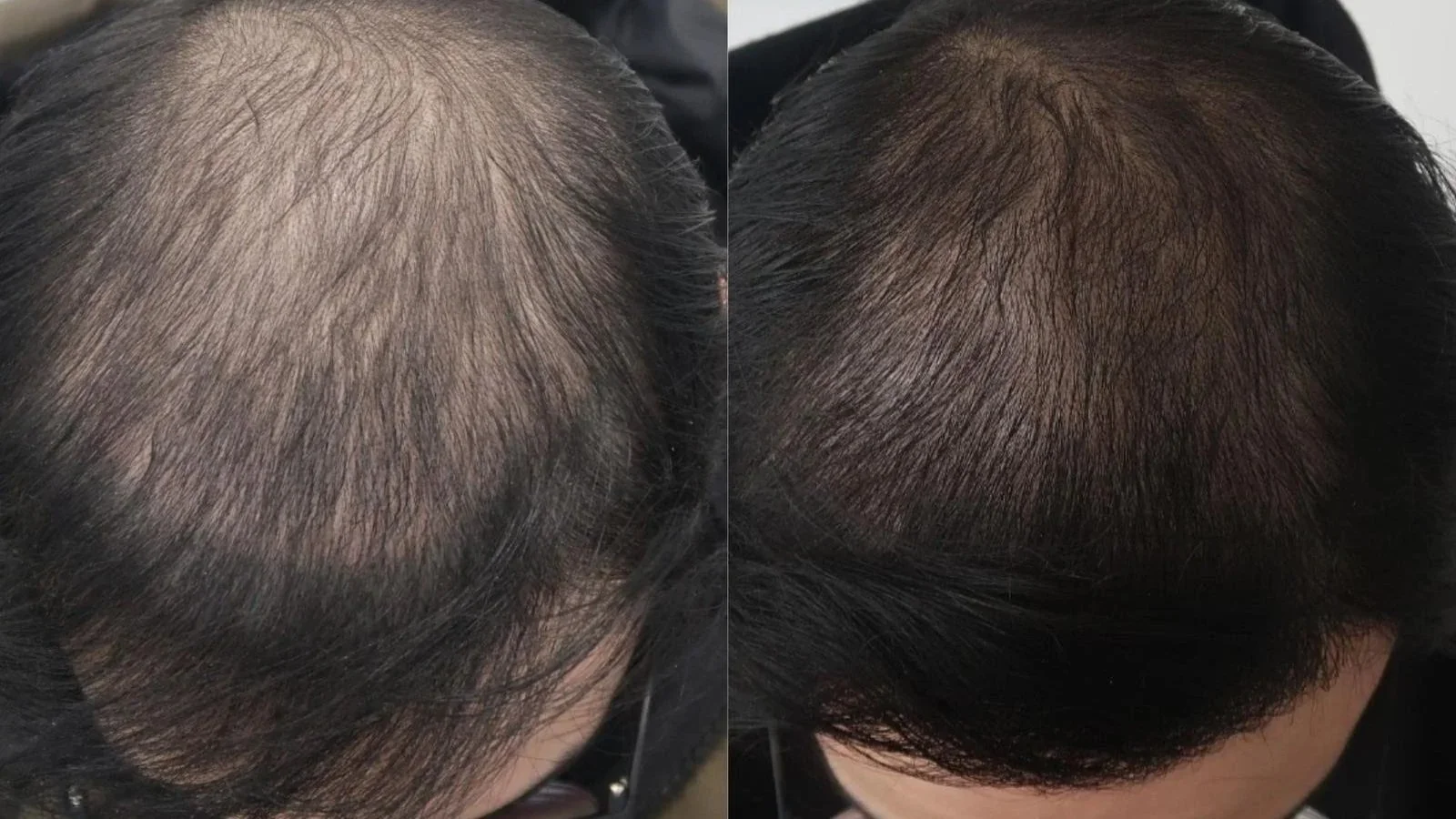
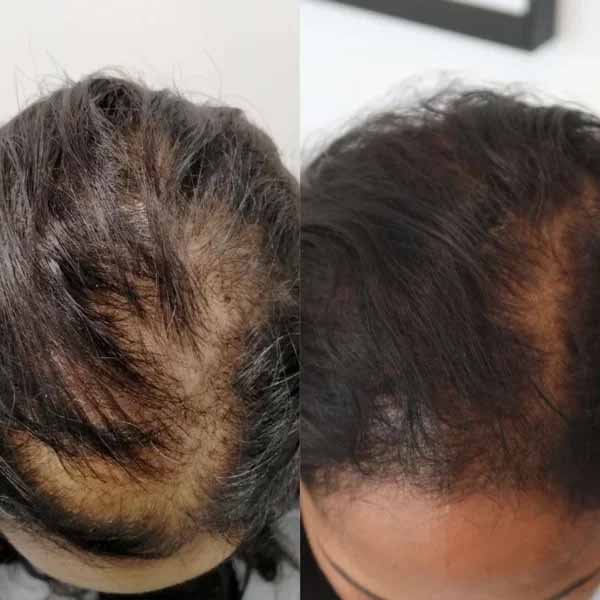
In practical terms, topical or scalp-delivered Dutasteride® is used to help slow follicle miniaturisation and stabilise ongoing androgen-driven thinning. It does not work like a cosmetic thickening product, and it is not a quick fix. It is a medical treatment aimed at influencing one of the biological drivers behind patterned hair loss.
Who This Treatment Usually Suits Best
Topical Dutasteride® tends to suit patients who show signs of androgenetic alopecia rather than purely temporary shedding.
That usually includes:
- thinning through the crown or temples
- gradual loss of density over time
- family history of male or female pattern hair loss
- miniaturised hairs seen on dermatoscopy
- progression despite standard topical care
It may also suit patients who want a more targeted strategy as part of a medically supervised treatment plan.
Where I would be more cautious is in patients with:
- sudden diffuse shedding without a clear pattern
- untreated scalp inflammation
- unresolved hormonal or systemic drivers
- advanced bald areas where follicles may no longer be viable
In those cases, the more important question is not whether Dutasteride® is “good”, but whether the diagnosis is right.
This is why an online hair growth consultation or in-clinic scalp assessment matters before treatment starts.
How It Differs From Oral Options
Patients often ask whether topical Dutasteride® is simply the same as oral Dutasteride® in another form. The answer is no.
The main difference is delivery. Oral treatment is systemic. Topical or scalp-directed treatment is designed to act locally, within the treatment zone. That distinction matters when a patient is trying to balance effectiveness, convenience and personal comfort with treatment choice.
The decision between topical, mesotherapy-based or oral hormone-directed treatment should always be individual. It depends on the pattern of loss, the stage of miniaturisation, previous treatment history and how aggressive the thinning appears to be.
Why It Is Often Combined With PRP, PRF Or GFC
This is where many patients become frustrated if they expect one treatment to do everything.
Dutasteride® can help slow the hormonal process that drives miniaturisation, but it does not directly improve scalp circulation, reduce inflammation in every case, or stimulate tissue repair the way regenerative therapies can. That is why combination treatment often makes more sense than relying on one modality in isolation.
PRP
PRP hair treatment is often used when early to moderate thinning is present and the goal is to stimulate weaker follicles, improve blood flow and support the growth phase. PRP works well when there are still viable follicles that can respond.
PRF
PRF hair restoration provides a slower release of growth factors and is often useful where the scalp environment needs more prolonged regenerative support. This can be helpful in patients whose thinning has become more established.
GFC
GFC hair therapy delivers a highly concentrated group of growth factors and is often selected when a stronger regenerative signal is needed. It is commonly recommended in structured courses of three to six treatments, with many patients choosing a package of six for consistency and momentum.
In short, Dutasteride® may help reduce ongoing DHT-driven damage, while PRP, PRF and GFC help improve the environment and signalling around the follicle. Those are different jobs, and they often work better together than separately.
Why Scalp Diagnosis Matters Before Starting
A hormone-directed treatment should never be prescribed on assumption alone.
If the patient’s real problem is telogen effluvium, active scalp inflammation, nutritional stress, postpartum shedding or advanced follicle loss, then treatment aimed at DHT may underperform or miss the real issue entirely.
This is one reason why a consultation should include:
- treatment history
- pattern and timeline of loss
- scalp examination
- dermatoscopy
- discussion of inflammatory signs, miniaturisation and density change
The most effective plans begin with a clear diagnosis, not a popular product.
Patients trying to understand the difference between temporary shedding and progressive loss often find our blog Hair Shedding vs Hair Loss: When Is It Normal and When Should You Be Concerned? a useful starting point before deciding on treatment.
How It Fits Into A Long-Term Plan
Topical Dutasteride® is best understood as part of a broader strategy rather than a single-event treatment.
For some, that strategy may include:
- hormone-directed scalp treatment
- a course of PRP, PRF or GFC
- treatment of inflammation where needed
- maintenance review over time
For others, it may become clear during consultation that a different pathway is more appropriate. Take our online hair growth consultation and let’s get started on your hair restoration journey.