When patients start researching hair restoration, they usually divide treatments into two groups. There are the injection-based options, such as PRP, PRF, GFC or mesotherapy, and then there are the treatments that feel less invasive and easier to approach. Alma TED Hair Restoration sits firmly in that second category.
It attracts a very particular type of patient. Often, it is someone who wants active treatment for thinning hair but feels hesitant about needles. In other cases, it is a patient looking for a lower-discomfort option that still fits within a medical hair restoration plan. It is also relevant for men and women who want a treatment that focuses on scalp delivery and follicle support without downtime. Our current Alma TED protocol uses a needle-free, ultrasound-assisted trans-epidermal delivery system for hair restoration and scalp health, with a typical course of 3 to 6 sessions spaced 4 weeks apart.
What Alma TED Actually Is
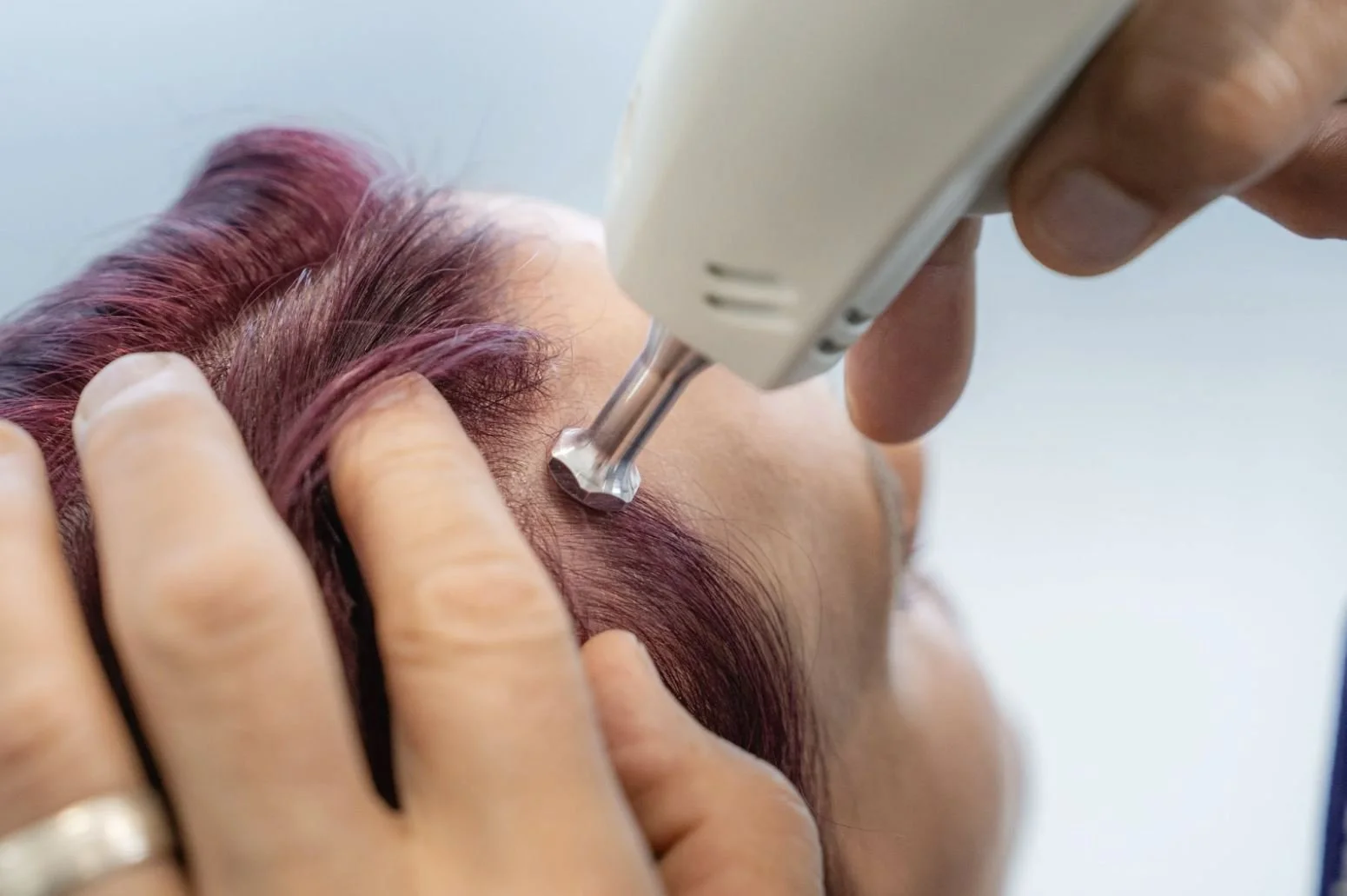
Alma TED stands for TransEpidermal Delivery. In practical terms, it uses ultrasound and air pressure to create temporary pathways in the scalp so active ingredients can be delivered without needles. The aim is to help those ingredients penetrate more effectively while keeping the treatment comfortable and non-invasive.
In our treatment pathway, Alma TED is used to support hair restoration, follicle regeneration, circulation and scalp health. It can be used to deliver active compounds including exosomes, peptides and growth factors into the scalp, where they may support thicker, healthier growth.
That delivery method is what makes Alma TED different. It is not simply a serum placed on the scalp, and it is not the same as a platelet injection. It belongs in its own category.
How Needle-Free Delivery Works
The reason Alma TED is interesting is that it changes how treatment is delivered, not just what is delivered.
Ultrasound waves and air pressure open pathways in the scalp without needles or significant discomfort. Through those pathways, hair-restorative compounds are absorbed more deeply. This is intended to improve nutrient delivery to follicles, support scalp vascularisation and help reactivate dormant follicles.
That mechanism matters because many hair treatments succeed or fail based on the scalp environment. Delivery is not a side issue. If the goal is to influence follicle behaviour, the question is whether the active treatment is reaching the tissue in a useful way.
This is one reason Alma TED can make sense within a broader regenerative programme. It focuses on comfort and delivery, rather than asking the patient to tolerate injections every time they want an active treatment.
Who Alma TED Usually Suits Best
Alma TED tends to suit patients who:
- are experiencing thinning or shedding
- want a non-invasive treatment option
- are reluctant to start with injections
- are looking for scalp support in early or moderate thinning
- want a treatment with no real downtime
It is particularly relevant for patients with hair thinning or shedding, male or female pattern baldness, postpartum or stress-related hair loss, and age or hormone-related thinning. It is entirely non-invasive and generally takes around 20 to 30 minutes per session.
That profile makes it especially attractive for patients who want to start somewhere active, but not overly aggressive.
When It May Be Chosen Over Injection-Based Treatments
This is where patient selection matters.
Alma TED may be chosen over injection-based treatments when the patient’s main priority is:
- avoiding needles
- having a more comfortable treatment experience
- starting with a gentler delivery method
- maintaining a consistent treatment schedule without injection fatigue
For example, a patient who could benefit from regenerative support but feels anxious about scalp injections may be more likely to follow through with Alma TED. In some cases, that makes it the better treatment, even if an injection-based option is technically stronger on paper. Adherence matters in hair restoration.
That said, there are also cases where I would still favour injections. A patient with more advanced patterned thinning, strong miniaturisation, or a clear need for concentrated growth factor delivery may be better suited to PRP hair treatment, PRF hair restoration, or GFC hair therapy, depending on diagnosis. Each of those treatments has a different biological profile and a different role in treatment planning.
How It Fits Alongside Exosome Treatment
One of the more interesting parts of Alma TED is that it can work as a delivery platform for exosome-based treatment. Alma TED can painlessly infuse exosomes for hair growth stimulation.
That makes it relevant to patients already comparing exosome options such as DP Exo-Grow® Exosomes or Exomide® Exosome Mesotherapy. The difference is that Alma TED is the delivery technology, while Exo-Grow® or Exomide® are the regenerative agents being delivered.
Patients often confuse those categories. The best way to think about it is this: Alma TED is the route in, while exosomes are part of what may be delivered through that route.
What Results Can Realistically Look Like
This is where treatment language needs to stay honest.
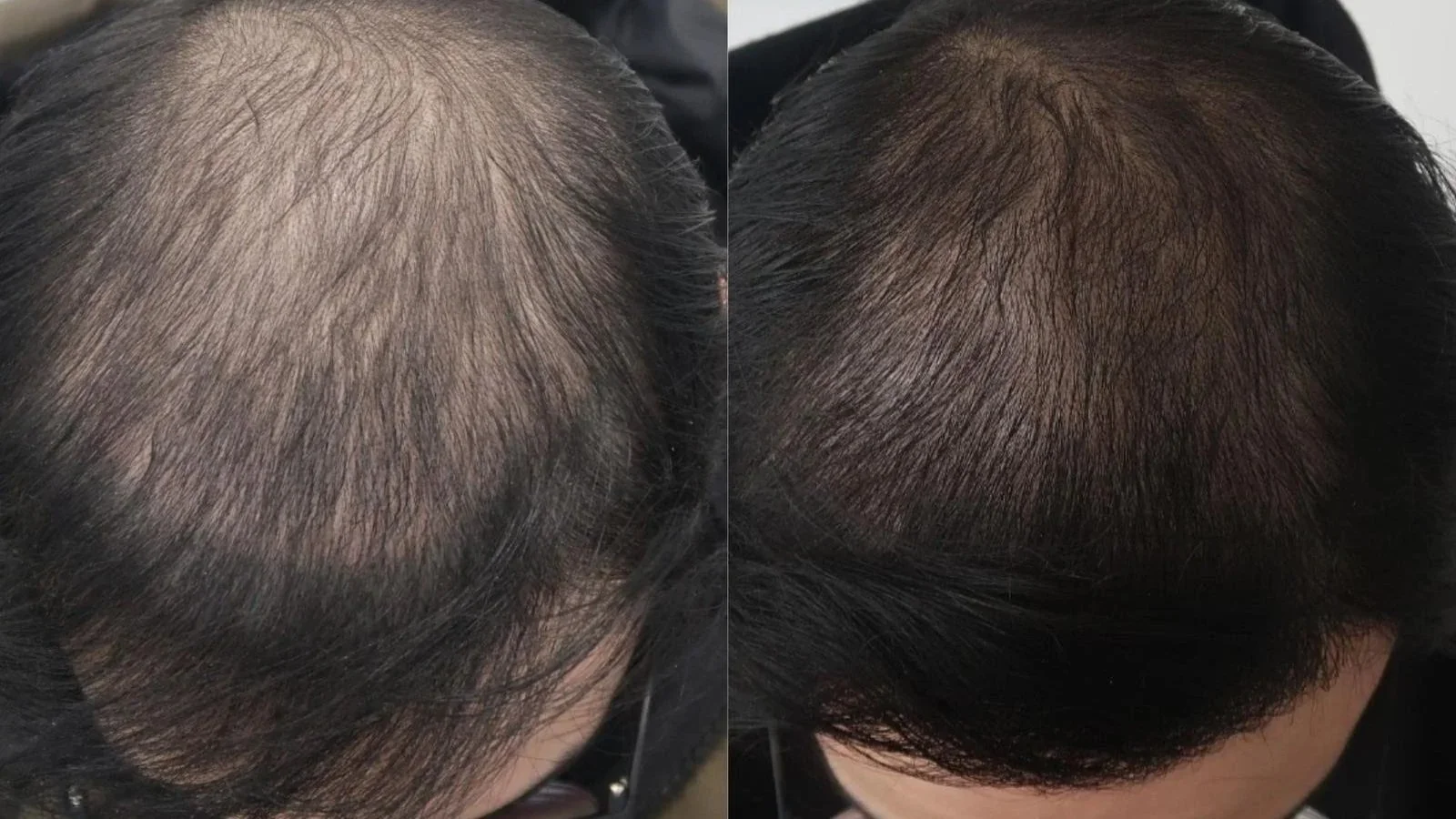
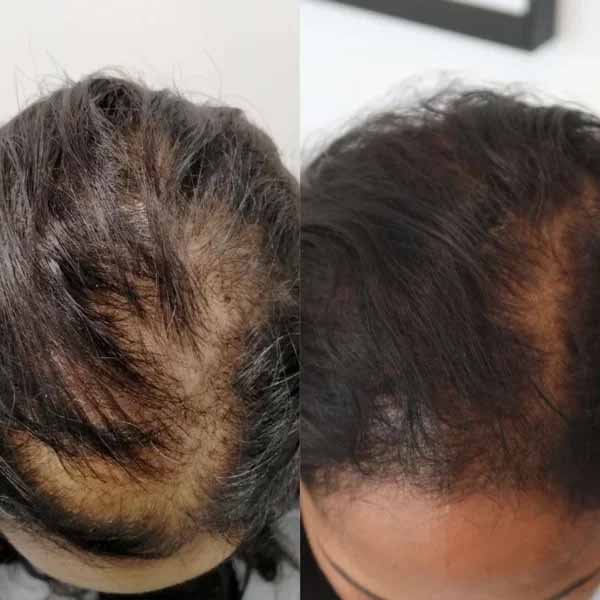
Patients often notice reduced shedding and improved hair texture within 4 to 6 weeks, with more optimal results developing over 3 to 6 months. Maintenance is often recommended every 6 to 12 months.
That is a sensible expectation framework. It is gradual, not instant. It is also variable. Some patients mainly notice a healthier scalp and less shedding at first. Others go on to see better density and stronger strands over time. None of that means the treatment is guaranteed to regrow hair in advanced bald areas.
Hair restoration still depends on follicle viability, diagnosis, hormones, inflammation and adherence. That remains true whether the treatment uses needles or not.
Why Diagnosis Still Comes First
A non-invasive treatment can still be the wrong treatment if the diagnosis is wrong.
If the real issue is advanced follicle loss, strong androgen-driven miniaturisation, untreated inflammation or a hormonal driver that has not been addressed, Alma TED may underperform. That does not mean the device is ineffective. It means the biology was mismatched.
That is why I would always start with a proper online hair growth consultation and assessment before recommending it. The question is never just “does this treatment work?” The real question is “does this treatment work for this scalp, at this stage, for this diagnosis?”
For patients wanting broader background on where regenerative treatments sit in the treatment landscape, our published blog Decoding Regenerative Hair Therapies: PRP, PRF & GFC is a helpful companion read.
Where Alma TED Fits In A Thoughtful Hair Plan
Alma TED is a useful treatment because it gives us another way to support the scalp and follicles without relying entirely on injections. For the right patient, that makes it highly practical.
It suits men and women who want a non-invasive, comfortable, medically guided option. It can also fit well alongside broader regenerative care, especially when scalp delivery and treatment adherence are major considerations.
The important thing is not to choose it because it sounds easier. The important thing is to choose it when the diagnosis, the scalp biology and the treatment goal all line up.